mural guard
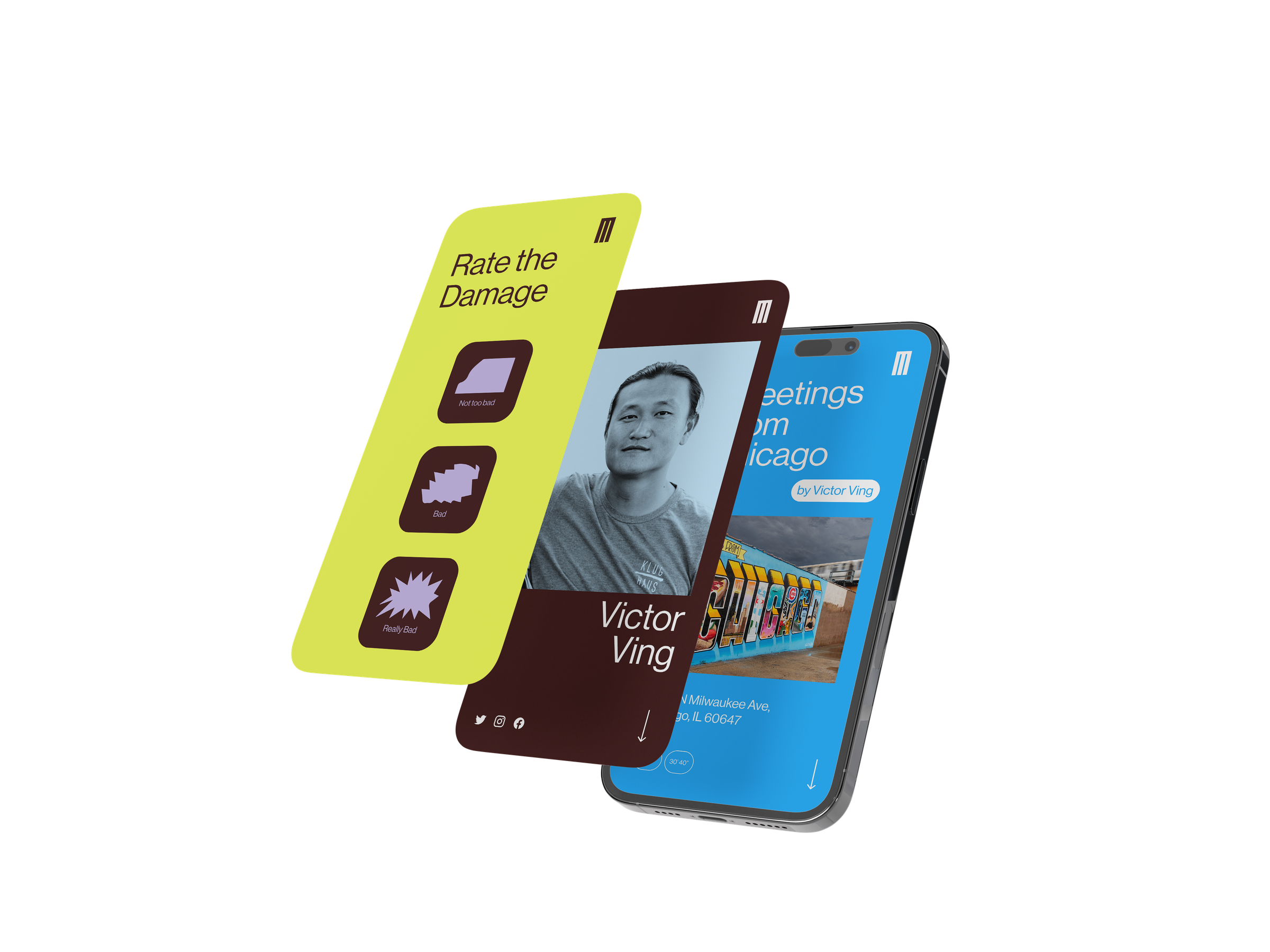
Chicago has no system built to protect public art. Mural Guard is a single app to report damaged murals, map new ones, and discover the artists behind them.
Product Designer
Me and Nancy Dumitru
2 weeks
Chicago has no system built to protect public art. As a result, murals are defaced or lost with no reliable path to flag them, document them, or connect them back to their artists.
A single app to report damaged murals, map new ones, and discover the artists behind them.
- Report damageFlag a damaged mural with a photo and location. Reports track the work itself, not a graffiti-removal request.
- Add muralsAnyone can add a mural to the map, keeping the record current instead of frozen in a static registry.
- Discover art & artistsBrowse murals nearby and see who made them.
Of ~500 murals painted in Chicago during the WPA era, at least 220 are gone destroyed, painted over, lost, or sold. (Art for the People, via WBEZ)
Chicago’s mural registry was created only after city crews mistakenly painted over commissioned murals they took for graffiti, including J.C. Rivera’s “Bear Champ,” destroyed within 5 days of completion. (Artnet / CBS Chicago)
There are no systems tracking how many murals Chicago loses each year.
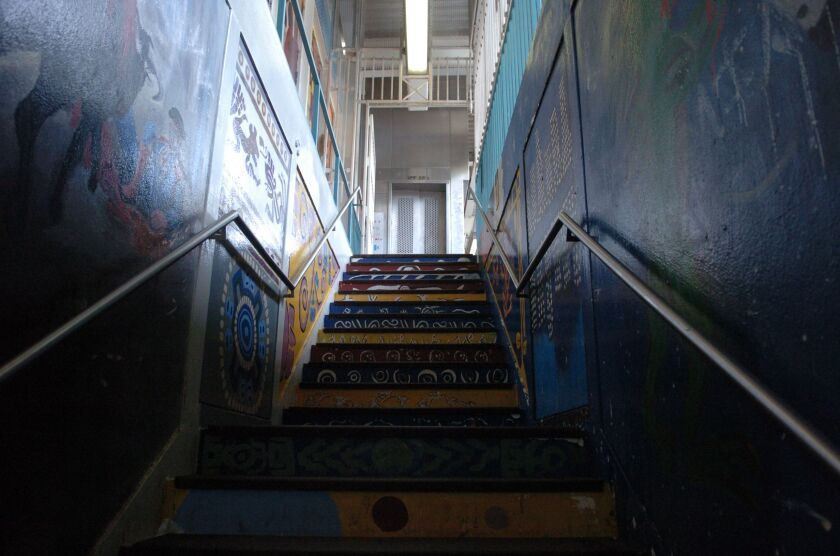
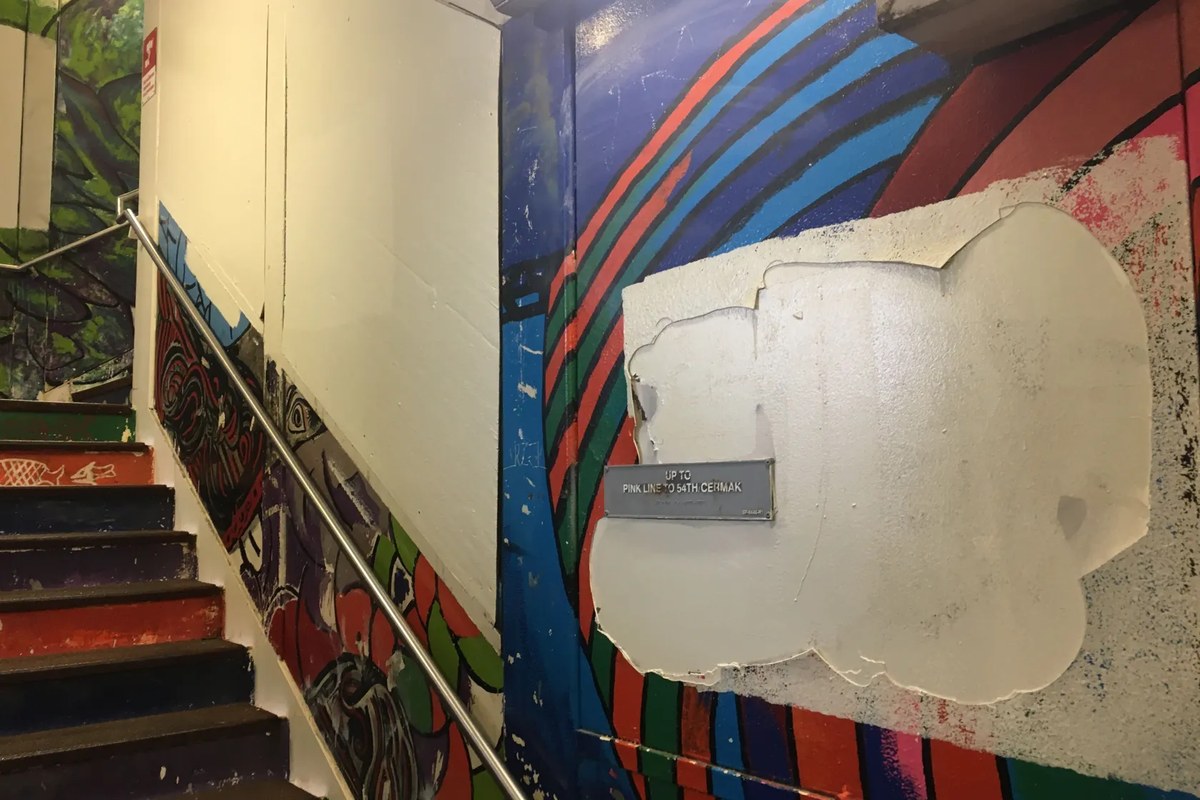
Pilsen Pink Line CTA station mural for over 25 years
The murals were painted in 1998 by Francisco Mendoza, Gallery 37 students and the Mexican Museum of National Art as part of city’s Adopt-A-Station program, according to the CTA website. The murals depicted cultural icons in Mexican history and told stories about the neighborhood. It was whited out in 2019 with plans to restore the art but nothing’s happened.
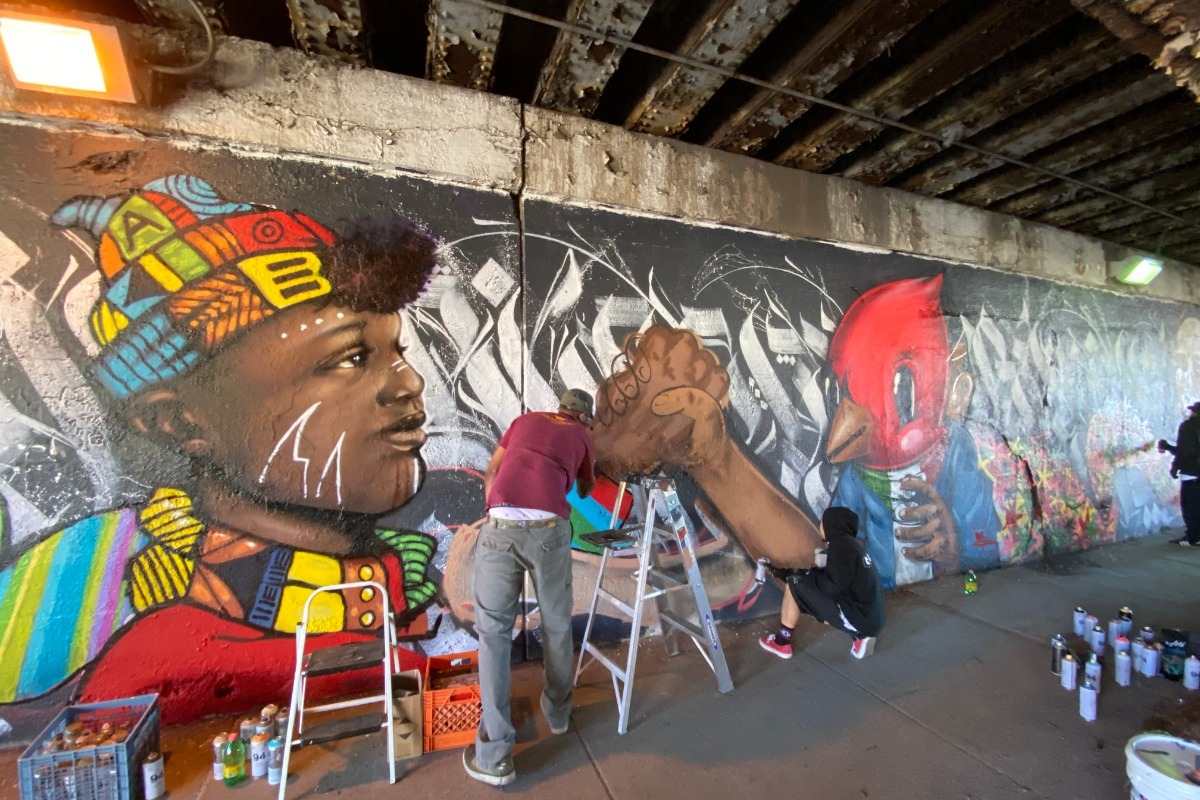
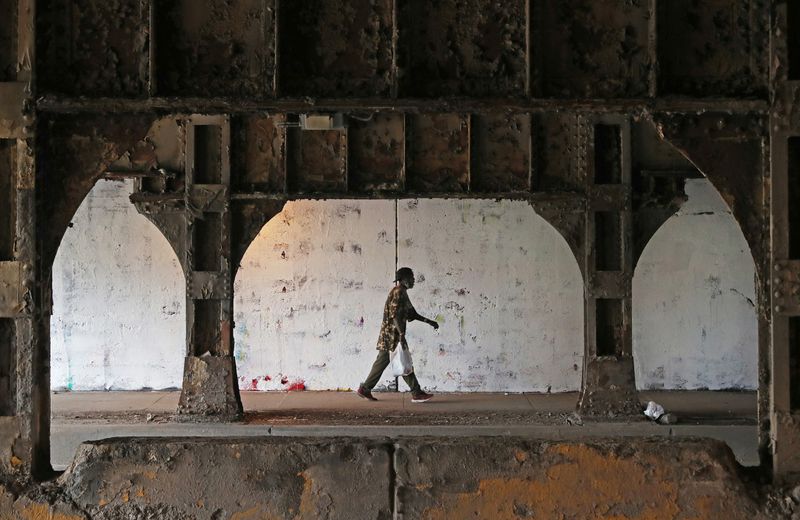
Fulton Market mural made after the death of Breonna Taylor
Seven black and Latino artists joined forces in 2020 to paint a mural to represent unity between the two communities and to nourish the Black Lives Matter movement. The massive mural under a viaduct in the 300 block of North Damen Avenue was covered in white paint overnight, less than 12 hours after it was finished. When the artists returned the next day to take photos, all they found was a bucket of white paint and rollers, the ones, they assumed, used to cover up their message.
Chicago tourism boards, bloggers, and neighborhood groups all publish mural maps and tours, and one community catalog alone lists nearly 9,000 murals and 273 artists. But this discovery lives in scattered blogs and third-party maps, disconnected from any way to protect the work.
Murals carry a neighborhood’s identity, economy, and memory. Research ties them to higher foot traffic and local vitality. When one is erased, the neighborhood loses a piece of itself.
Nancy and I visited Chicago neighborhoods with murals (Pilsen and Wicker Park) to observe how people engage with public art, and interviewed 6 residents invested in mural preservation. To understand how people naturally approach reporting a damaged mural, we asked each participant to try to report a tagging incident, without telling them where to go, and observed the path they took.
Everyone guessed differently: a police station, the Parks Department, 311, and no one was right. Even when searching online, the 311 “Graffiti Removal Request” was hard to locate.
None of the real options fit. 311 exists to erase markings, and the Mural Registry only lists murals. There’s no path to report damage and protect the work.
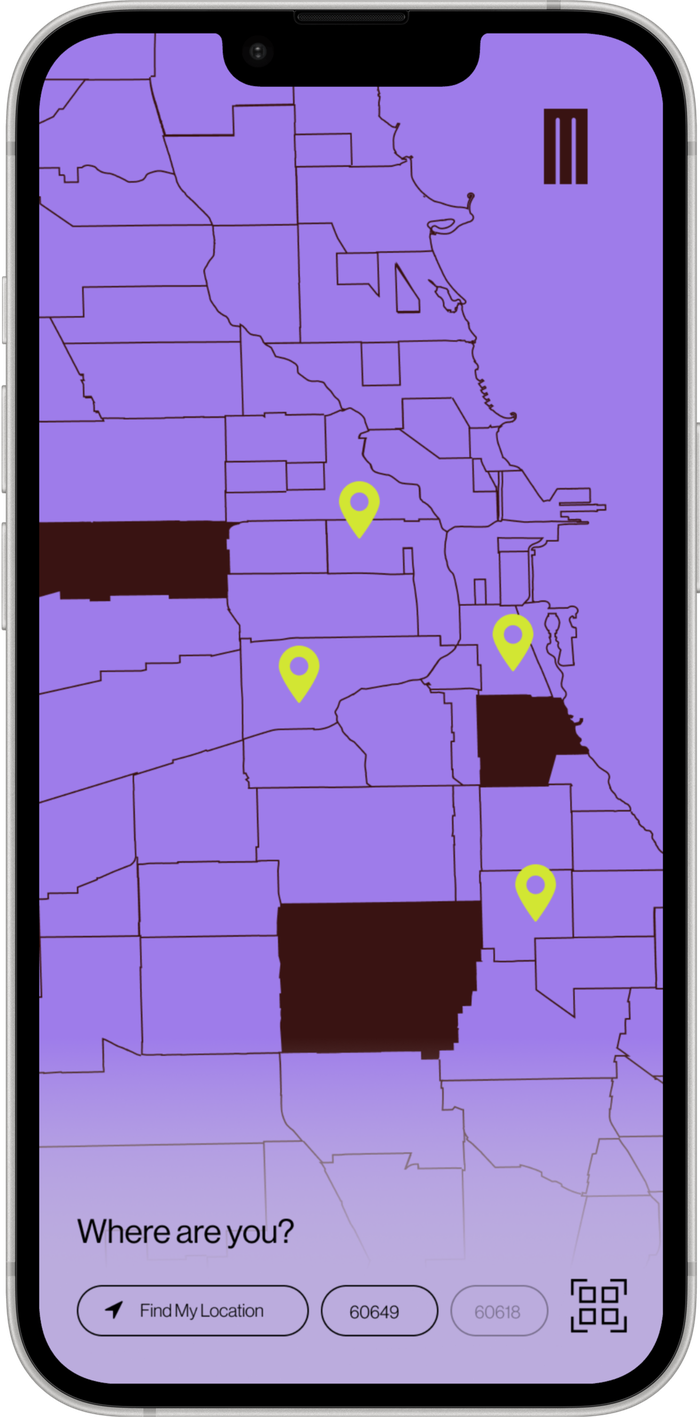
Anyone can find a mural on the map (by zip or by browsing) and report damage to it, or add a mural that isn’t listed yet.
The home map is intentionally abstract rather than a standard street map, so it can highlight what matters most: Chicago’s neighborhoods and murals.
Research shows that murals are discovered spatially and that people already want to find the art around them.
Neighborhoods with the most murals: Pilsen,
Logan Square, Wicker Park, etc.

One mural you can tap to see the art, artist, and details. Inspired by the stars on the Chicago flag.

Marks murals that are tagged

We implement a QR program to make discovery and reporting easier. Working with artists to place Mural Guard QR codes next to their murals, a single scan would pull up everything about that piece (location, artist, history) and let someone report damage in one step.
The core problem from our research was wayfinding: people who saw a tagged mural didn’t know where to go. So reporting is never more than a step away. When submitting a report, users rate the severity of the damage which helps prioritize which cases a volunteer should check first.
Murals are constantly painted, changed, and lost, so the map has to stay current. Anyone can add a mural and once verified, it joins the map for others to discover. This keeps Mural Guard a living record rather than a static list.
Artists can create a profile, add the murals they’ve painted, and share information about themselves and their work.
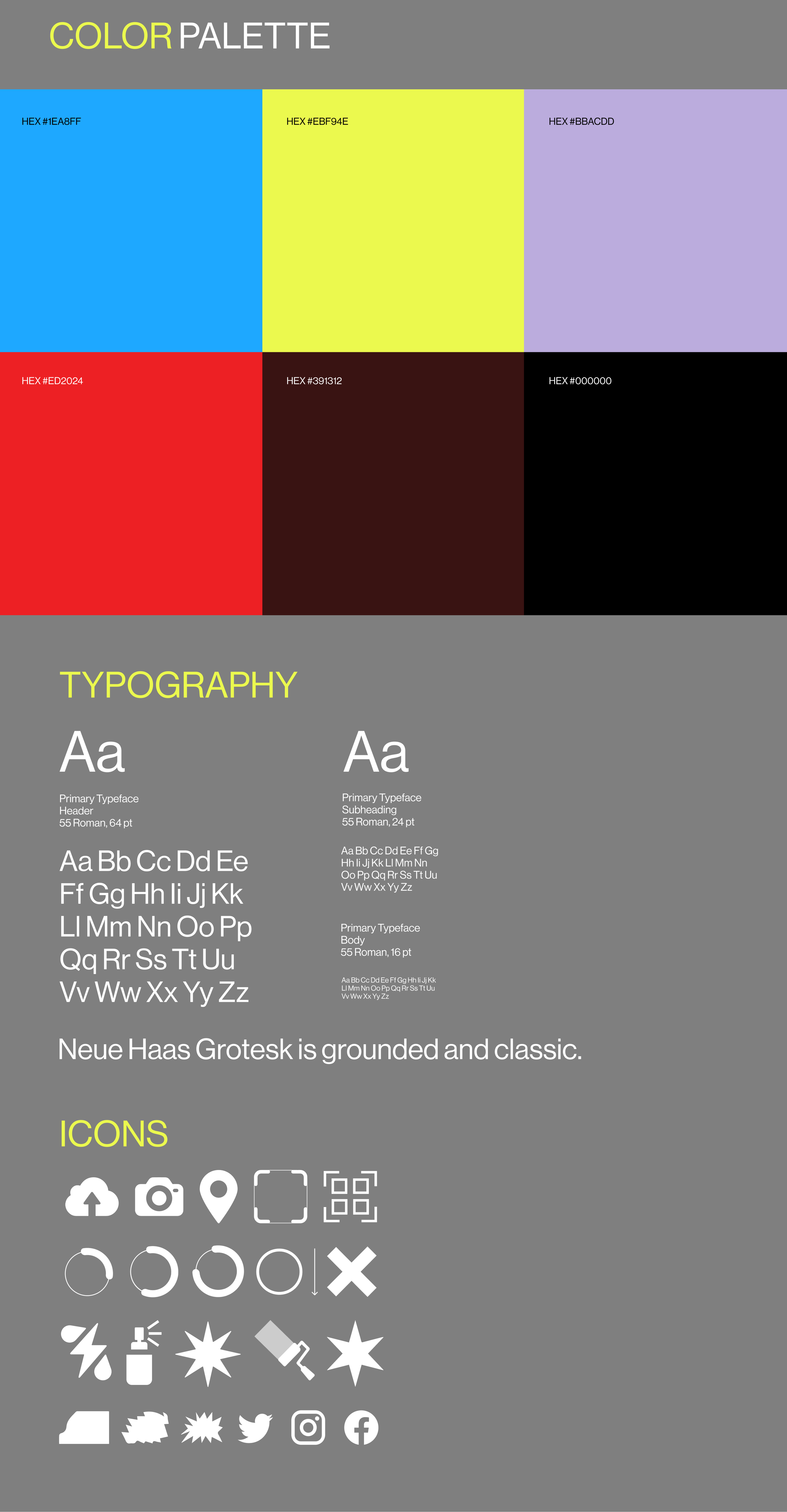
The color palette is inspired by Chicago’s bold and colorful murals.